Wondering how to identify scrap metal? You’ve cleared out the shed, finished a renovation or inherited a pile of old equipment, and now there’s a heap of metal in the driveway. Some of it might be worth good money. Some of it might not. The trouble is that a lot of scrap metal looks alike, and what you have decides what you get paid.
The good news is that learning how to identify scrap metal doesn’t take special equipment. With a magnet, a key and a bit of attention, you can sort most household and workshop metal in a few minutes. This guide covers the simple tests, what each common metal looks like, and how to stay safe while you sort.
Why It Pays to Know How to Identify Scrap Metal
Scrap yards pay by the kilogram or tonne, and the rate depends on the type of metal. Copper, brass, stainless steel and aluminium sell at very different prices, and all of them are worth more than mixed steel. If you throw everything into one bin, it’s usually weighed as the lowest-value metal in the load.
Knowing how to identify scrap metal will help in three ways:
- You get a fairer price. Separated metal can be weighed and paid for its own rate.
- You know what to expect. Once you can tell copper from brass, you can work out roughly what your pile is worth.
- You save time. Sorting at home means a quicker visit to the yard.
The Magnet Test: Your First Step in Identifying Scrap Metal
The magnet test is the quickest way to split your pile in two. Take a fridge magnet or a stronger one from a hardware shop and touch it to the metal.
- The magnet sticks: the metal contains iron, which means it’s ferrous. This covers steel, cast iron and wrought iron. These metals are common, heavy and usually cheaper per kilogram.
- The magnet doesn’t stick: the metal is non-ferrous. This covers copper, brass, aluminium, lead and most stainless steel, and these usually pay more.
If you’d like a deeper look at the difference, read our guide to ferrous and non ferrous metals.
How to Identify Scrap Metal by Sight and Feel?
Once you’ve done the magnet test, look at colour, weight and surface. Here’s what to look for.
1. Copper
Copper is easy to spot once you know it. It’s a reddish-orange colour, like an old coin, and it’s soft enough to bend by hand in thin pieces. It’s not magnetic. Older copper turns dull brown or develops green patches, but if you scratch the surface, the bright orange shows through. You’ll find copper in pipes, electrical wiring, cables and the windings inside electric motors. Read more about what we pay for it on our copper page.
2. Brass
Brass is a dull gold or yellow colour and feels heavier than aluminium. It isn’t magnetic. Look for it in taps, fittings, valves, door handles and old plumbing parts. If a “gold” tap doesn’t attract a magnet and feels heavy, it’s probably brass.
3. Aluminium
Aluminium is light, silvery-grey and doesn’t rust, though it can get a white, chalky film. It’s not magnetic. It’s used in drink cans, window frames, ladders, boat fittings and car parts. If a piece of metal feels surprisingly light for its size, it’s likely aluminium.
4. Stainless Steel
Stainless steel is a bright, silvery metal that resists rust and stays shiny. It’s found in sinks, kitchen benchtops, cutlery and commercial kitchen equipment. It’s often non-magnetic, but some grades stick to a magnet, so don’t rely on the magnet alone. If it looks clean and rust-free and it’s heavier than aluminium, it’s probably stainless.
5. Steel and Cast Iron
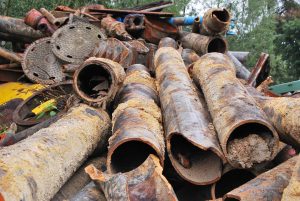
Steel is magnetic and turns orange-brown when it rusts. You’ll find it in old fencing, sheeting, tools, appliances and structural offcuts. Cast iron is also magnetic, but it’s darker, rougher and brittle, and it’s very heavy for its size. Common examples are old pipes, engine blocks and cookware.
Stay Safe When You Sort Scrap Metal
A few basic precautions make sorting easier and safer:
- Wear sturdy gloves, boots and eye protection, since old metal has sharp edges.
- Don’t cut into gas cylinders, fire extinguishers or sealed tanks. Ask us first.
- Keep car batteries upright and away from children and pets.
- Wash your hands after handling lead or old batteries.
If you’re unsure about a material, leave it alone and ask.
Frequently Asked Questions
1. How to identify scrap metal like copper, brass and aluminium?
Copper is reddish-orange, brass is a dull gold or yellow, and aluminium is light and silvery-grey. None of them are magnetic. If you’re unsure, weigh two pieces of similar size in your hands, because aluminium feels much lighter than the other two.
2. How to identify scrap metal with just a magnet?
A magnet is a good first step, but it isn’t enough on its own. Steel and cast iron stick to it, while copper, brass, aluminium and lead don’t. Some grades of stainless steel are magnetic and others aren’t, so combine the magnet test with the scratch, weight and colour checks to identify scrap metal accurately.
3. Should I strip the insulation off wire before I identify the metal inside?
There’s no need to. Bring the wire as it is, and the yard will assess it. Never burn insulation off to get at the copper, because the fumes are toxic and it can be dangerous and illegal. If you’re unsure what a cable contains, ask us before you start.
Bring Your Scrap Metal to A1 Scrap Metal Recyclers
You don’t need to be perfect at this. Once you know how to identify scrap metal, sorting your pile gets much easier, and if you’re still unsure about a few pieces, bring them in and A1 Scrap Metal Recyclers will help. Watch your metal weighed on certified scales and get paid by bank transfer on the spot.
Visit us, or call 0401 784 792 with any questions about how to identify scrap metal or what your load might be worth. Larger loads can be collected from across the Hunter Region, so contact us to arrange pickup.